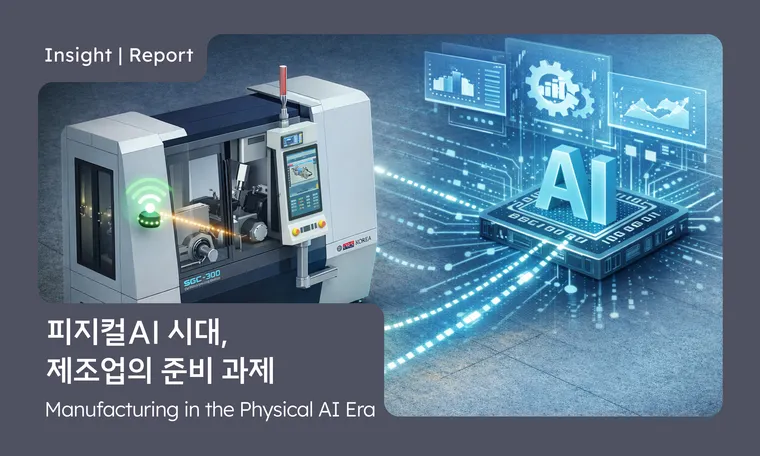
Ep.1에서는 피지컬 AI라는 개념을 통해, AI가 실제로 작동하기 위해 필요한 것은 알고리즘이 아니라 데이터가 생성·축적될 수 있는 물리적 환경이라는 점을 살펴봤습니다. Ep.2에서는 이 흐름을 이어, 현장 목소리와 제도·생태계 관점, 그리고 제조 지능화 초기 단계에서 드러난 피지컬 AI의 가능성과 한계를 중심으로 살펴보고자 합니다.
그렇다면 AI기술을 제조 현장에 적용하기 위해, 우리는 무엇부터 준비해야 할까요?
Artificial intelligence is evolving rapidly, yet manufacturing sites and institutional systems struggle to keep pace.
Following Ep.1’s focus on Physical AI and data-ready environments, Ep.2 examines on-site realities, policy ecosystems, and the early-stage limits of manufacturing intelligence.
What must be prepared first to make AI truly work on the factory floor?
피지컬 AI가 무엇인지, 왜 주목받고 있는지 궁금하다면 Ep.1에서 먼저 확인해 보세요!
If you’re new to Physical AI and curious about why it matters, Ep.1 offers a helpful starting point!
기술의 속도와 현장의 속도, 그 간극
The Gap Between AI Advancement Speed and Manufacturing Readiness
최근 AI는 제조업을 포함한 모든 산업에서 핵심 키워드로 자리 잡았습니다. 생성형 AI, 에이전트 AI, 피지컬 AI까지, 기술 자체는 이미 상용화 단계에 가까워 보입니다. 그러나 이번 AX 이니셔티브 컨퍼런스에서 반복적으로 강조된 것은 기술의 완성도보다, 현장에서 이를 받아들일 준비가 되어 있는가라는 질문이었습니다.
실제 제조 현장에서는 설비 환경, 작업 조건, 조직 문화, 데이터 인프라 등 수많은 변수들이 얽혀 있습니다. AI가 빠르게 발전하는 만큼, 이를 적용하려는 제조업의 준비 수준도 함께 논의되지 않으면, 기술은 개념에 그칠 수밖에 없다는 점이 명확히 드러났습니다.
Recently, AI has become a key term across all industries, including manufacturing. From generative AI to agent AI and physical AI, the technology itself seems to be approaching commercialization. However, what was repeatedly emphasized at the AX Initiative Conference was not the level of technological maturity, but the question of whether the industry is truly prepared to adopt it.
In actual manufacturing sites, numerous variables such as equipment environment, work conditions, organizational culture, and data infrastructure are intertwined. As AI develops rapidly, if the level of preparedness in manufacturing is not discussed alongside the technology’s evolution, AI may remain just a concept, unable to reach its full potential.
피지컬 AI 생태계와 현장의 목소리
The Physical AI Ecosystem and Voices from the Field
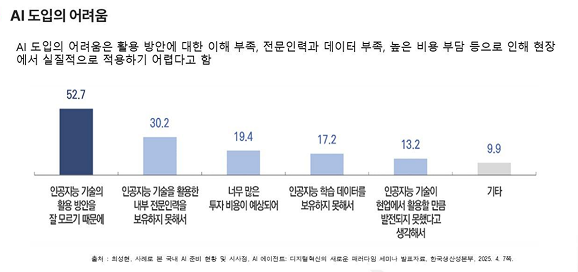
공공 부문을 중심으로 생성형AI 활용은 이미 상당히 보편화되고 있습니다. 일부 지자체 조사에 따르면 다수의 공무원이 업무 또는 개인 용도로 AI를 활용하고 있으며, 행정 영역 전반에서도 AI기반 활용 전략이 활발히 검토되고 있습니다. 즉, ‘AI를 활용하는 경험’ 자체는 이미 많은 영역에서 일상화 단계에 접어들고 있습니다.
그러나 피지컬 AI, 특히 제조업 현장으로 들어오는 순간 상황은 크게 달라집니다. 컨퍼런스 4번째 세션에서는 피지컬 AI 확산을 가로막는 핵심 요인으로 데이터 표준화의 부재, 센서·장비 중심의 데이터 생태계 미비, 그리고 현장 애로사항을 충분히 반영하지 못한 정책 구조가 언급되었습니다. 이는 개별 기업의 노력만으로는 해결하기 어려운 구조적 문제이며, 정부와 산업이 공동으로 인프라를 구축해야 한다는 점을 분명히 시사합니다.
The use of generative artificial intelligence is already widespread in the public sector.
Surveys conducted by local governments show that many public officials use AI for both work and personal tasks, and AI-driven strategies are actively being reviewed across administrative domains. In other words, the experience of “using AI” has already become part of everyday operations in many areas.
However, the situation changes significantly when it comes to Physical AI, especially on manufacturing sites. In the fourth session of the conference, key barriers to Physical AI adoption were identified, including the lack of data standardization, underdeveloped sensor- and equipment-based data ecosystems, and policy frameworks that fail to fully reflect on-site challenges. These were highlighted as structural issues that cannot be addressed by individual companies alone, underscoring the need for joint infrastructure development between government and industry.
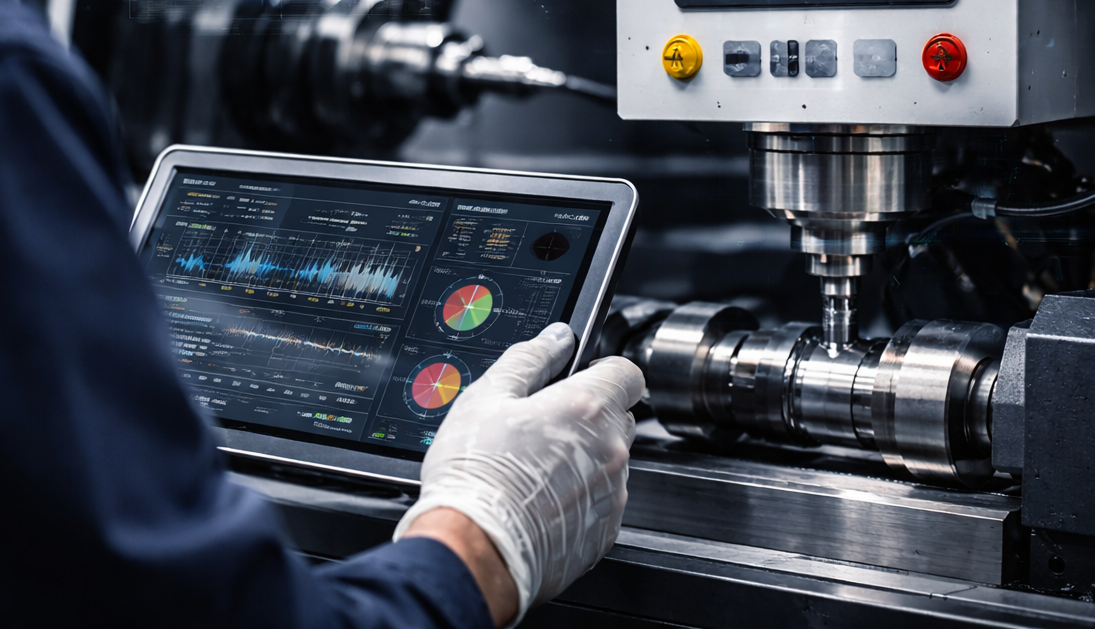
기계·장비 산업 관점에서 특히 주목할 부분은, 이러한 논의 속에서 정책의 초점이 점차 AI를 '활용하는 기업'에서 AI가 실제로 작동할 수 있는 환경을 만드는 산업으로 이동하고 있다는 점입니다. 이에 따라 장비 제조사는 더 이상 성능과 정밀도를 제공하는 역할에 머무를 수 없으며, 정책 흐름에 부합하는 AI 대응형·데이터 수집형 장비 구조를 어떻게 구현할 것인지가 피지컬 AI 생태계에서 핵심 과제로 떠오르고 있음을 이번 세션은 분명히 보여주었습니다. 이는 향후 제조업 전반에서 장비의 역할과 책임이 근본적으로 재정의되고 있음을 시사합니다.
From the machinery and equipment industry perspective, a key takeaway is that policy focus is shifting from companies that simply “use AI” to industries that create the environments in which AI can actually operate.
As a result, equipment manufacturers can no longer limit their role to delivering performance and precision alone. This session clearly showed that developing AI-ready, data-collecting equipment structures aligned with policy direction has become a core challenge within the Physical AI ecosystem—signaling a fundamental redefinition of the role and responsibility of equipment in manufacturing.
Agent AI와 제조 지능화, 그리고 한계
Agent AI and Manufacturing Intelligence: Opportunities and Limitations
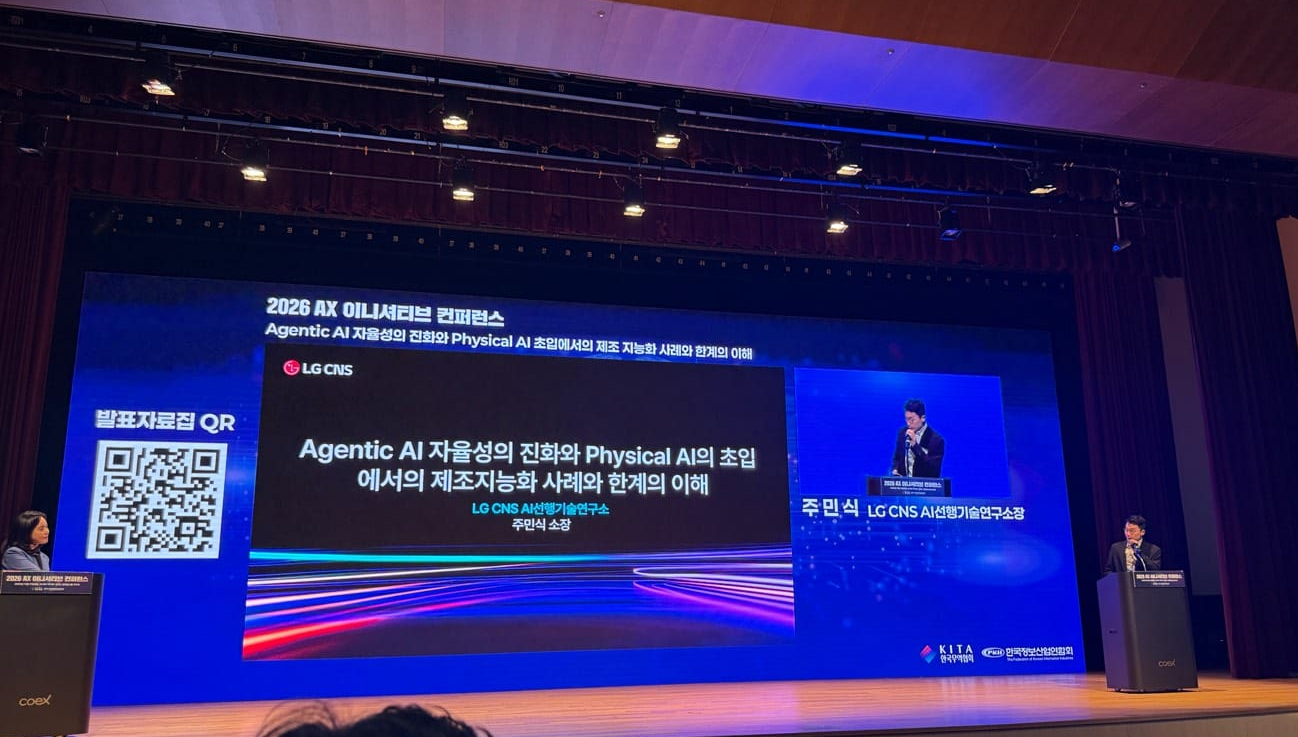
이어진 세션에서는 Agent AI의 자율성과 제조 지능화 사례가 다뤄졌습니다.
Agent AI를 기반으로 한 자율형 시스템은 제조업에서도 점차 주목받고 있지만, 실제 현장 적용은 여전히 제한적인 수준에 머물러 있다는 점이 강조되었습니다. 제조 현장의 로봇과 설비는 작업마다 요구되는 속도와 감속 조건, 물성치, 환경 변수 등이 모두 다르며, 이러한 복잡한 파라미터가 AI 적용의 큰 장벽으로 작용하고 있기 때문입니다.
이를 극복하기 위해 자가 학습(Self-learning) 기반 로봇 제어 기술이 개발되고 있지만, 현재의 적용 사례를 보면 대부분 특정 라인이나 특정 상황에 최적화된 형태에 그치고 있습니다. 데이터의 다양성이 충분히 확보되지 않은 상태에서, 복잡한 제조 환경 전반을 포괄하는 자율성을 구현하기에는 현실적인 제약이 분명해 보였습니다.
The following session addressed the autonomy of Agent AI and examples of manufacturing intelligence.
Agent AI based autonomous systems are receiving growing attention in manufacturing, yet their application in real production environments remains limited. Manufacturing robots and equipment operate under varying requirements for speed, deceleration, material properties, and environmental conditions, and this complexity continues to be a major barrier to AI adoption.
To address these challenges, self learning robot control technologies are being developed. However, current implementations remain largely optimized for specific production lines or narrowly defined situations. Without sufficient data diversity, it is difficult to realize autonomy that can accommodate the full complexity of manufacturing environments.
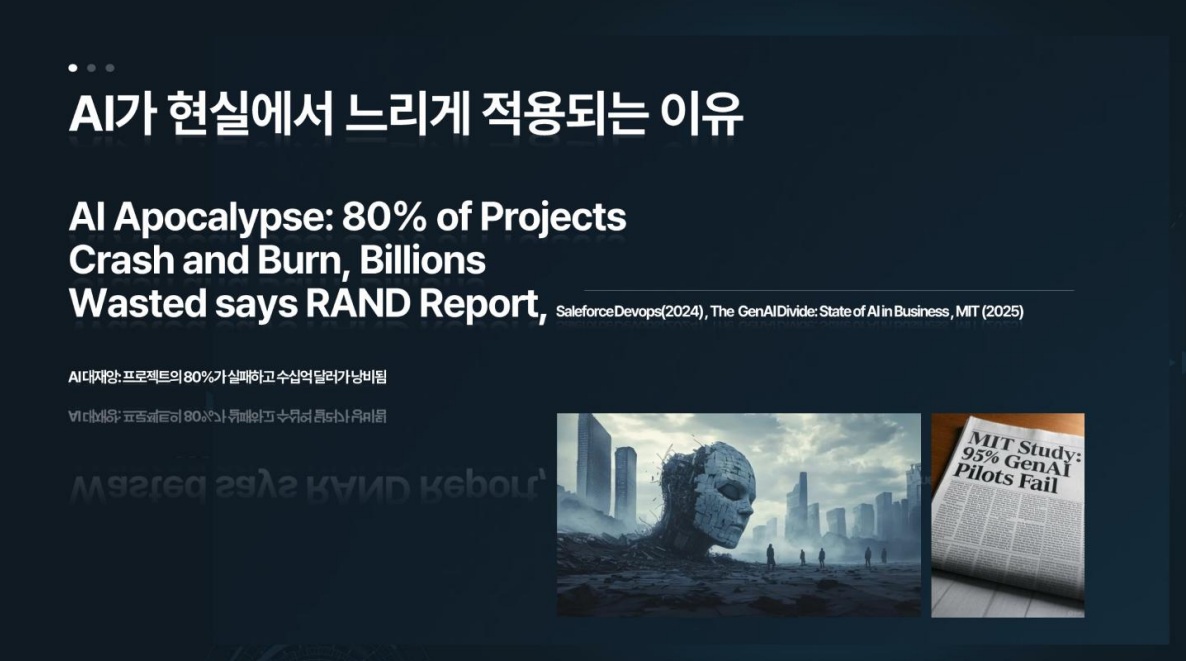
이러한 흐름을 종합해보면, 제조업에서 AI는 고정된 모델보다는 상황과 조건에 따라 유연하게 적응할 수 있는 범용형 모델로 발전할 필요가 있습니다. 그리고 그 출발점은 공정별 데이터를 안정적으로 확보하는 데 있습니다. 장비 단계에서부터 데이터가 자연스럽게 수집·기록되는 구조가 갖춰지지 않는다면, 제조 지능화는 일부 제한적인 적용을 넘어서기 어렵다는 점을 다시 한 번 생각해보게 됩니다.
Taken together, this suggests that AI in manufacturing must evolve beyond fixed models toward more adaptable, general purpose approaches. The starting point for this shift lies in securing stable, process level data. Without equipment structures that enable data to be naturally collected and recorded from the outset, manufacturing intelligence is likely to remain limited to narrow and experimental applications.
기술보다 먼저 준비되어야 할 것
What Needs to Come Before the Technology
이번 컨퍼런스는 그동안 참여해왔던 여러 세미나와는 분명히 다른 인상을 남겼습니다. 제조업 전반이 피지컬 AI를 중심으로 어떤 조건과 준비를 요구받고 있는지를 현실적으로 돌아보게 한 자리였습니다.
특히 AI 자체보다 데이터를 만들어내고 활용할 수 있는 환경이 중요하다는 메시지는, 기술보다 먼저 무엇을 준비해야 하는지를 다시 생각하게 했습니다.
제조 현장의 복잡성과 정책·생태계 흐름을 함께 살펴보며, 지금 단계에서의 과제와 방향을 정리해볼 수 있었던 시간으로 남았습니다.
This conference left a clearly different impression from many other seminars we have attended.
Rather than simply introducing new technologies, it offered a realistic look at the conditions and preparations required across the manufacturing industry as it shifts toward Physical AI.
In particular, the recurring emphasis on the importance of data-ready environments, rather than AI technology itself, prompted us to reconsider what needs to be prepared before adoption. By examining the complexity of manufacturing sites alongside policy and ecosystem trends, the conference provided an opportunity to reflect on the challenges and directions facing the industry at this stage.