Leadership is a core force shaping both performance and culture. Just as no single tool fits every task, not all work demands the same approach. Shouldn't leadership also adapt to each situation? ORSKOREA explored this question and returned with key insights.
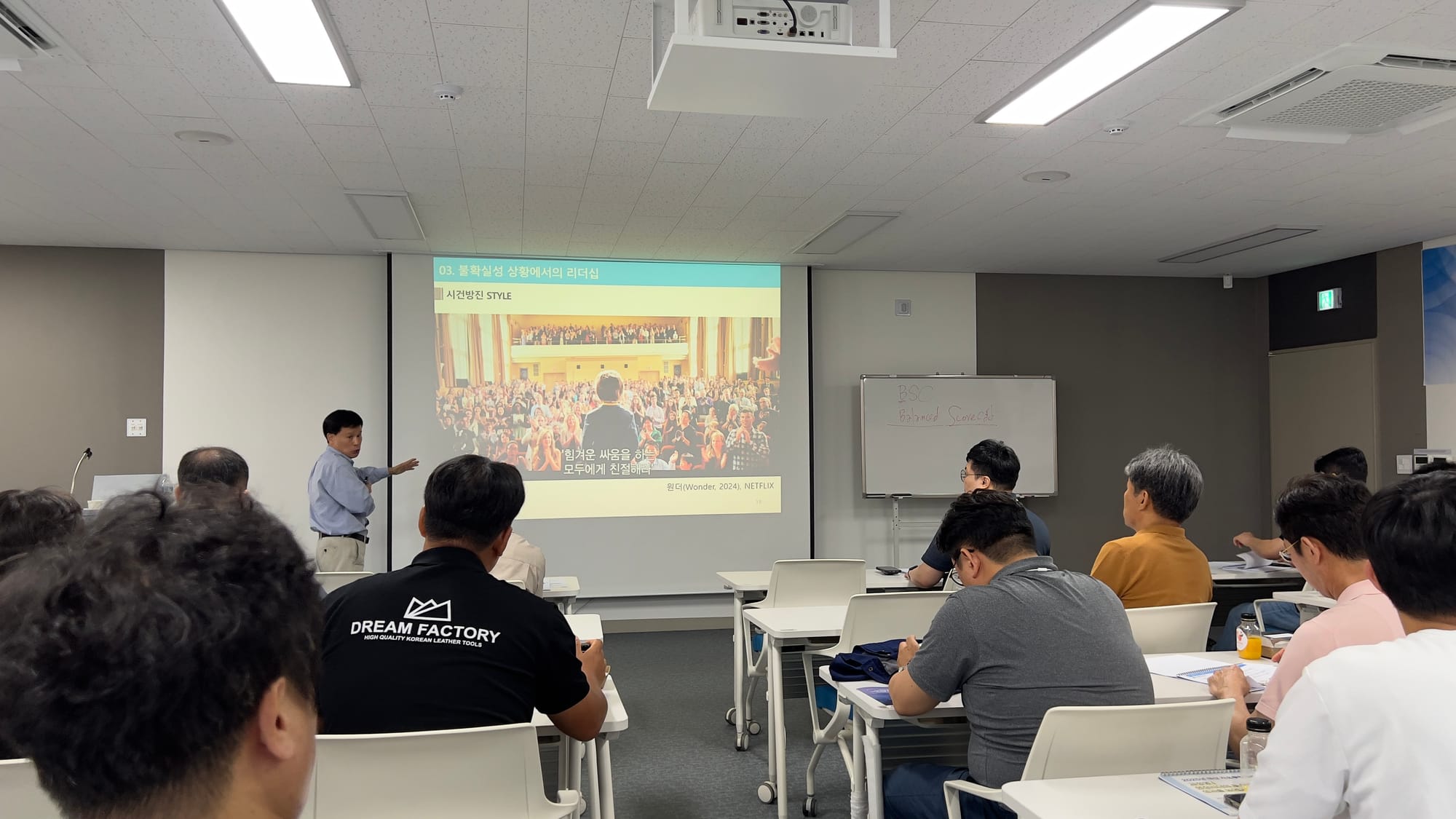
지난 6월 19일, 오알에스코리아는「일의 유형 분석과 매칭 리더십 – 현장 리더의 두 얼굴: 성과를 높이고, 사람을 잇다」 교육에 참여했습니다. 이번 교육은 단순히 리더십을 강화하기 위한 과정이 아니라, 지금 우리가 적용하고 있는 리더십 방식이 정말 우리의 제조업 현장에 맞는가? 라는 질문을 던지는 시간이었습니다.
On June 19, ORSKOREA participated in the leadership program 「 Task-Type Analysis & Matching Leadership – The Two Faces of Field Leaders. 」It was a moment to pause, step away from everyday routines, and rethink what leadership really means in a real manufacturing workplace.
그렇다면 지금 우리의 조직은 어떨까요? 다양한 업무가 공존하는 제조업 현장에서, 우리는 과연 그 일에 맞는 리더십을 선택하고 있을까요?
이번 교육을 통해 오알에스코리아가 얻은 핵심 인사이트를 지금부터 공유합니다.
So, what about our organization today? In a workplace where diverse tasks coexist, are we truly applying leadership that aligns with the needs of each type of work?
Here are the key insights ORSKOREA gained from this program.
제조업 현장 업무의 4가지 유형
Four Types of Work in Manufacturing Operations
| 예측 어려움 | 예측 쉬움 | |
| 복잡함 |
복잡-불예측(W4) : 비일상적 복잡 업무 - 프로젝트 기획 - 신제품 설계·개발 - 고객의 비일상적 복잡 기술 Needs 대응 |
복잡-반복(W3) : 일상적 복잡 업무 - 품질 관리, 통계분석 - 정밀 설비의 유지·보수 - 고객의 패턴화된 복잡 기술 클레임 대응 |
| 단순함 |
단순-불예측(W2) : 비일상적 단순 업무 - 비일상적 단순 설비 교체 지원 - 공정 중 단순 문제 대응 - 현장 고객 상담과 민원 처리 |
단순-반복(W1) : 일상적 단순 업무 - 단순 반복적 조립·검수 작업 - 단순 반복적 포장 작업 - 단순 반복적 데이터 입력 |
그렇다면 왜 업무를 ‘복잡성’과 ‘예측 가능성’으로 나누는 걸까요?
제조업 업무는 비슷해 보이지만, 막상 현장에서 경험해보면 일이 어려운 이유가 모두 다릅니다. 어떤 업무는 기술적으로 복잡해서 어렵고, 어떤 업무는 단순하지만 상황이 자주 바뀌기 때문에 예측이 어렵습니다.
즉, 업무의 난이도를 결정하는 요소는 ‘누가 하느냐’가 아니라 아래 두 가지 기준으로 나눌 수 있습니다.
- 다뤄야 할 변수와 지식의 양(복잡성)
- 일이 계획대로 진행되는지, 아니면 즉각 대응이 필요한지(예측 가능성)
이 두 축은 단순한 분류 기준이 아니라 조직의 리더십 스타일, 역할배치, 교육 방식, 매뉴얼 설계, KPI구조까지 영향을 줍니다. 그래서 글로벌 제조 기업과 리더십 연구에서도 가장 현실적인 기준으로 활용되고 있습니다.
이제 아래에서는 이 네 가지 유형이 실제 제조업 현장에서 어떤 부서와 업무 형태로 나타나는지 예시로 정리했습니다. 읽으면서 자연스럽게 아래 질문을 떠올려보면 더 좋습니다.
"내 업무는 어디에 가까울까?"
"우리 팀은 어떤 유형과 가장 닮아 있을까?"
🌎 English Table Version (Click to Expand)
| Unpredictable | Predictable | |
| Complex |
W4 — Complex & Unpredictable (Non-routine complex work)
– Generating diverse ideas and creative solutions
– Supporting learning-driven culture and experimentation – Setting long-term vision and direction – Leading new product design and development – Managing high-uncertainty customer technical needs |
W3 — Complex & Repetitive (Routine complex work)
– Quality management and statistical analysis
– Supporting QC and technical improvement cycles – Maintaining precision equipment and technical systems |
| Simple |
W2 — Simple & Unpredictable (Non-routine simple work)
– Supporting unexpected equipment replacement
– Addressing unexpected issues during process operations – Handling frontline customer inquiries or complaints |
W1 — Simple & Repetitive (Routine simple work)
– Assembly and inspection work
– Packaging or labeling tasks – Repetitive data entry |
Why do we categorize work based on ‘Complexity’ and ‘Predictability’?
Although manufacturing tasks may seem similar, the reasons why work is difficult can vary greatly in practice. Some tasks are challenging due to their technical complexity, while others are simple but difficult to predict because of frequent changes in circumstances.
In other words, the factors that determine the difficulty of a task are not based on ‘who does it,’ but can be categorized by the following two criteria:
- The amount of variables and knowle dge involved (Complexity)
- Whether the work proceeds as planned or requires immediate action (Predictability)
These two axes are not merely classification criteria; they influence organizational leadership styles, role assignments, training methods, manual design, and KPI structures. This is why they are utilized as the most practical criteria in global manufacturing companies and leadership studies.
Now, below is an example of how these four work types manifest in actual manufacturing operations. As you read, it would be helpful to reflect on the following questions:
"Which category does my work closely align with?"
"Which type is our team most similar to?"
업무유형 예시
Examples by Work Type
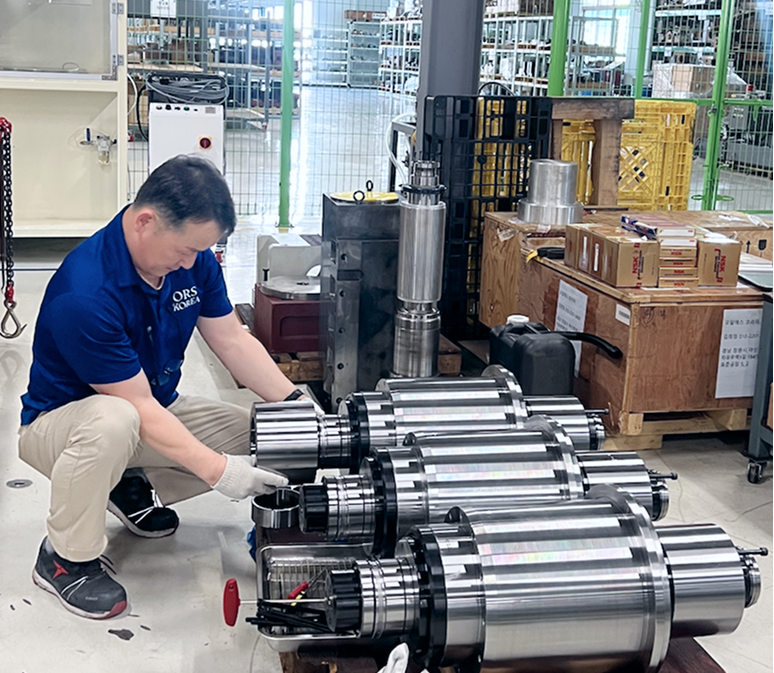
W4 유형 : 연구 개발 부서 (R&D Department)
- 신제품 개발과 같은 기술적 도전과 새로운 시장 요구에 맞춰 제품 설계 변경이 자주 발생합니다. 이 과정에서는 예측할 수 없는 변수가 많기 때문에, 팀원들에게 자율성을 부여하면서도 명확한 방향 제시가 필요합니다.
Frequent design changes are required to meet ne w market demands, and technical challenges such as new product development constantly arise. Because many variables cannot be predicted in advance, clear direction-setting is needed while allowing team members autonomy.
W3 유형 : 품질 관리 부서 (Quality Control Department)
- 부품 제조나 품질 검사 과정에서, 복잡한 작업이 반복적으로 이루어집니다. 기계적 결함이나 품질 문제를 해결하는 과정은 반복적이지만, 정확도와 효율성이 매우 중요합니다.
In the process of component manufacturing and inspection, complex tasks are performed repeatedly. Although addressing mechanical failures and quality issues follows a repetitive pattern, accuracy and efficiency are crucial in this type of work.
W2 유형 : 설비 부서 (Maintenance Department)
- 설비 고장이나 기계 고장과 같은 예측할 수 없는 상황에 신속히 대응해야 합니다. 기계가 갑자기 고장 나거나 예기치 못한 사고가 발생할 수 있기 때문에 즉시 대응이 필요합니다.
This role requires qu ick responses to unexpected situations such as equipment malfunction or machine failure. Since breakdowns can occur without warning, the ability to react immediately is essential.
W1 유형 : 생산 부서 (Production Department)
- 조립, 검수, 포장 등 반복적인 생산 작업이 이루어집니다. 이 업무는 단순하고 예측 가능한 작업이지만, 정해진 절차와 규칙을 따라야 하므로 효율적으로 관리하는 것이 중요합니다.
This category involves repetitive production tasks such as assembly, inspection, and packaging. Although the work is simple and predictable, following established procedures and maintaining operational efficiency are essential.
우리의 업무 유형은 무엇일까?
What is our work type?

그렇다면 이제 중요한 질문이 남습니다.
- 우리 회사는 지금 어떤 유형의 업무가 가장 많을까?
- 나는 어떤 업무 방식에 익숙하고, 어떤 유형이 가장 어려울까?
- 우리 팀은 현재 업무 구조와 리더십이 서로 맞물려 있는가?
한 조직 안에서도 업무 유형은 하나로 고정되지 않습니다. 부서, 프로젝트 단계, 구성원 역량에 따라 달라집니다. 그래서 정답은 ‘하나의 유형’이 아니라, 우리 업무가 이 네 가지 중 어디에 위치하는지 맵핑(Map) 해보는 것입니다.
So now, an important question remains.
- Which type of work is the most common in our company?
- Which type am I personally most familiar with, and which type do I find the most challenging?
- Does our current leadership style align with the way work is structured in our team?
Even within a single organization, work types are never fixed.
They shift depending on the department, the project stage, and the capabilities of the people involved. So the answer is not choosing one single category, but rather: Mapping where our work falls among these four quadrants.
일의 유형에 따른 매칭 리더십
Matching Leadership to Work Types
| 예측 어려움 | 예측 쉬움 | |
| 복잡함 |
(W4) 위임형 + 방향성 제시 - 다양한 아이디어의 발상과 수렴이 중요 - 학습 중시 문화와 학습조직 지원 - 일의 비전과 목적, 방향성을 제시 - 창의성과 자율성, 자긍심을 부여 - 예측과 벤치마킹 기법 적용 - 실패 수용 문화 - 제한된 피드백과 모니터링 [리더십 포인트] 방향만 제시하고 실행은 팀 주도로 진행 |
(W3) 참여형 + 동기 부여 - 문제해결 과정에 구성원 참여 촉진 - 팀 미팅 활성화 및 QC Circle 지원 - 기술(tech.) 피드백을 통한 지속적 개선 - 상황(사례)과 정보, 해결방안 공유 - 동기부여(외적보상 및 칭찬 등)가 중요 [리더십 포인트] 의견을 이끌어내 함께 해결로 연결 |
| 단순함 |
(W2) 코칭형 + 신속 의사결정 - 문제 예측과 해결방안 모색 - 문제해결 중심의 관리 - 상황별 빠른 의사결정과 즉시 대응 - OJT(코칭, 멘토링 등)를 통한 개선 활동 - 사례 전파와 지속적 매뉴얼 개편 [리더십 포인트] 즉시 판단하고 실전형 피드백과 코칭 제공 |
(W1) 지시형 + 정서 지원 - PDCA cycle 적용을 통한 밀착 관리 - 정확성과 속도 중심의 관리 - skill 중심으로 기본에 충실 - 역활, 및 목표, 기준 명확화 - 실수 예방을 위한 지속적 훈련 - 정서적 지원(존중 및 인정 등)이 중요 [리더십 포인트] 절차를 제시하고 반복 점검과 지원 제공 |
정리하자면,
업무는 복잡성과 예측 가능성에 따라 달라지고, 그에 맞는 리더십 방식 또한 달라져야 합니다.
모두에게 같은 방식으로 리드하는 것이 아니라, 업무 특성과 구성원에 맞춘 맞춘 리더십이 더 효과적입니다.
🌎 English Table Version (Click to Expand)
| Unpredictable | Predictable | |
| Complex |
(W4) Delegating Style
– Encourages diverse idea generation and exploration
– Supports learning-based culture and experimentation
– Provides a clear vision, mission, and strategic direction
– Promotes creativity, autonomy, and ownership
– Applies prediction and benchmarking methods
– Accepts failure as part of innovation
– Provides limited monitoring and feedback
[Leadership Focus]
Provide direction and allow the team to lead execution. |
(W3) Participatory Style
– Encourages participation during problem-solving
– Activates team meetings and QC circle activities
– Offers technical feedback for continuous improvement
– Shares context, information, and solution options
– External rewards and recognition help boost motivation
[Leadership Focus]
Draw out opinions and lead the team toward joint solutions. |
| Simple |
(W2) Coaching Style
– Anticipates potential problems and scenarios
– Manages work with a problem-solving mindset
– Makes fast decisions and responds immediately when needed
– Provides on-the-job coaching and mentoring
– Shares cases and continuously updates manuals
[Leadership Focus]
Respond quickly with real-time coaching and actionable feedback. |
(W1) Directive Style
– Applies PDCA cycle with close supervision
– Focuses on accuracy and speed
– Builds strong foundational skills through repetition
– Clearly defines roles, targets, and standards
– Trains continuously to avoid mistakes
– Provides recognition and emotional reassurance
[Leadership Focus]
Provide clear instructions with continuous check-ins and support. |
In summary,
Work varies depending on complexity and predictability, and the leadership style should also change accordingly.
Leading everyone the same way isn't the most effective approach. Leadership tailored to the characteristics of the work and the team is more effective.
더 나은 성과를 위한 업무 점검, 지금 시작하세요!
Start the work review for better results now!
이제 스스로 점검해보세요.
- 우리 팀의 업무는 W1~W4 중 어디에 가까운가요?
- 나는 어떤 리더십 유형을 가장 자주 사용하고 있나요?
- 구성원의 경험과 업무 난이도는 서로 맞물리고 있나요?
- 혹시 지금까지 하나의 방식만 고수하고 있지 않았나요?
정답은 하나가 아니라, 상황에 맞춰 계속 조정해가는 것입니다.
하나의 제품이 완성되기까지는 설계, 제조, 품질, 영업까지 다양한 역할과 업무 방식이 함께 움직여야 합니다. 오알에스코리아는 기술력뿐 아니라, 리더십과 협업 방식 또한 계속 발전시키고 있습니다.
더 정밀한 품질, 더 나은 팀워크, 더 강한 조직으로 고객에게 최고의 결과를 전달하겠습니다.
오알에스코리아와 함께 더 나은 방식으로 일해요.
Now, reflect on your team’s work and leadership.
- Where does your team’s work fall between W1 and W4?
- Which leadership style do I most commonly use?
- Are the experiences of team members and the complexity of the work aligned?
- Have I been sticking to just one approach so far?
The answer isn't fixed; it’s about continuously adjusting to fit the situation. For a product to be completed, various roles and work styles must work together, from design, manufacturing, and quality to sales. At ORSKOREA, we are continuously improving not just our technical capabilities but also our leadership and collaboration methods.
We are committed to delivering the best results to our customers through more precise quality, better teamwork, and a stronger organization.
Let’s work together with ORSKOREA in a better way.