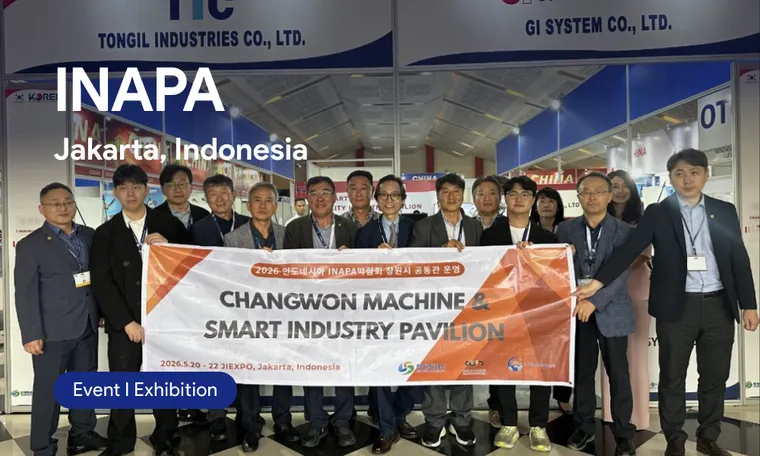
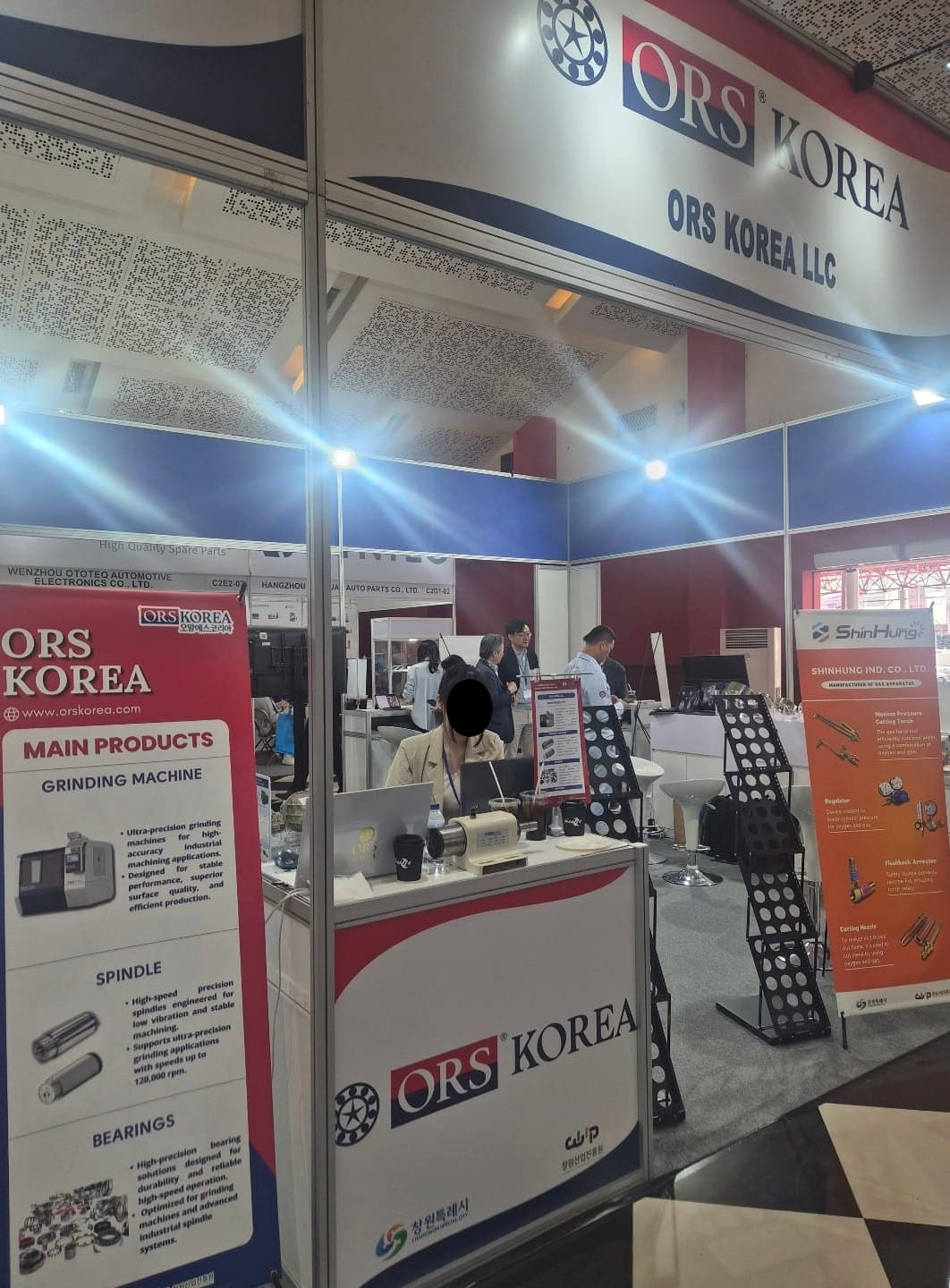
인도네시아 자카르타에서 2026년 5월 20일부터 22일까지 개최된 자동차 부품·액세서리·장비 전시회 INAPA 2026에서 오알에스코리아는 창원시 공동관으로 참가했습니다. 이번 전시에서 오알에스코리아는 자동차 부품 제조를 위한 정밀 연삭 솔루션과 고속·고주파 스핀들 기술을 소개하고, 인도네시아 제조 시장에서 요구되는 안정적인 가공 공정과 설비 신뢰성에 대한 기술 방향을 공유했습니다.
INAPA 2026 at a Glance: Automotive Parts Exhibition in Jakarta
INAPA 2026 개요: 자카르타에서 열린 자동차 부품 B2B 전시회
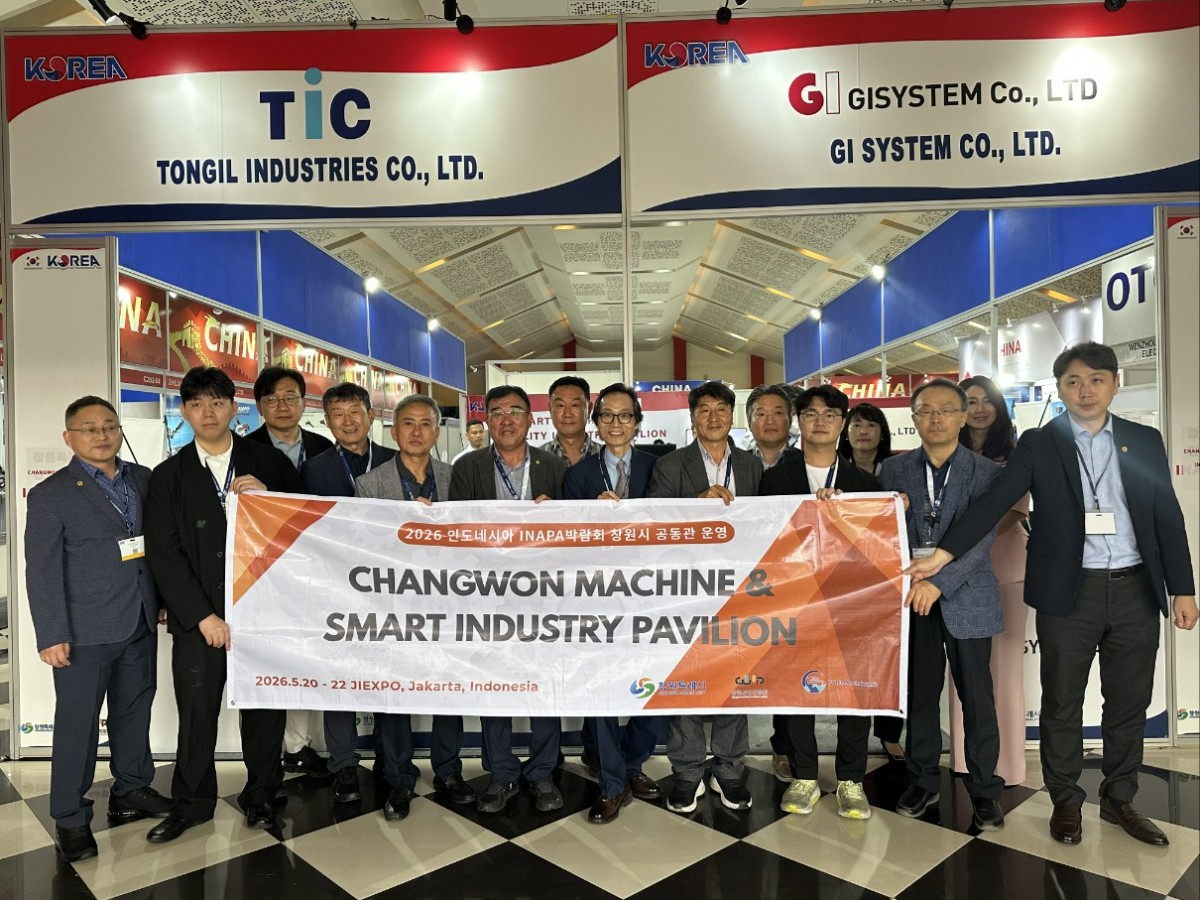
At INAPA 2026, the automotive parts, equipment, and related service sectors showed continued interest in solutions that can support production quality, machine reliability, and stable equipment operation. The exhibition reflected how Indonesia’s automotive parts market is moving beyond simple parts distribution and aftermarket supply toward more practical manufacturing capability and technical support.
This direction can create new opportunities for precision machining companies. As automotive parts such as shafts, bearings, drivetrain components, and other rotating parts require stable dimensional accuracy and surface quality, manufacturers need grinding solutions and spindle technologies that can support repeatable production, reduced downtime, and long-term equipment performance.
INAPA 2026에서는 자동차 부품, 장비, 관련 서비스 분야를 중심으로 생산 품질, 설비 신뢰성, 안정적인 장비 운용을 지원할 수 있는 솔루션에 대한 관심을 확인할 수 있었습니다. 이는 인도네시아 자동차 부품 시장이 단순 부품 유통과 애프터마켓 공급을 넘어, 보다 실질적인 제조 역량과 기술 지원 중심으로 확대되고 있음을 보여줍니다.
이러한 흐름은 정밀가공 기업에게도 새로운 기회로 이어질 수 있습니다. 자동차 부품 중 샤프트, 베어링, 드라이브트레인 부품, 회전체 부품 등은 안정적인 치수 정밀도와 표면 품질이 중요하기 때문에, 제조 현장에는 반복 생산성, 다운타임 저감, 장기적인 설비 성능을 뒷받침할 수 있는 연삭 솔루션과 스핀들 기술이 더욱 중요해지고 있습니다.
Why Precision Grinding and Spindle Technology Matter for Automotive Parts
자동차 부품 제조에서 정밀 연삭과 스핀들 기술이 중요한 이유
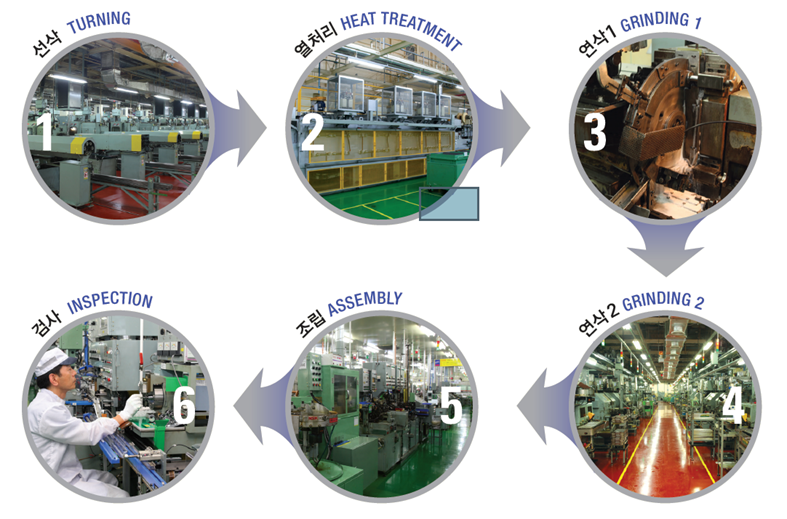
In automotive parts manufacturing, components often go through multiple machining steps such as turning, milling, heat treatment, and finishing. Among these processes, precision grinding is especially important when parts require stable dimensional accuracy, surface quality, and assembly precision. For shafts, bearings, drivetrain components, CV joints, and precision rotating parts, the final grinding process can directly affect part consistency and long-term performance.
자동차 부품 제조는 선삭, 밀링, 열처리, 마무리 가공 등 여러 공정을 거쳐 완성됩니다. 이 과정에서 정밀 연삭은 부품의 치수 안정성, 표면 품질, 조립 정밀도가 요구되는 단계에서 특히 중요한 역할을 합니다. 샤프트, 베어링, 드라이브트레인 부품, CV 조인트, 정밀 회전체 부품과 같이 반복 품질과 회전 안정성이 중요한 부품에서는 최종 연삭 공정이 부품의 일관성과 장기적인 성능에 직접적인 영향을 줄 수 있습니다.
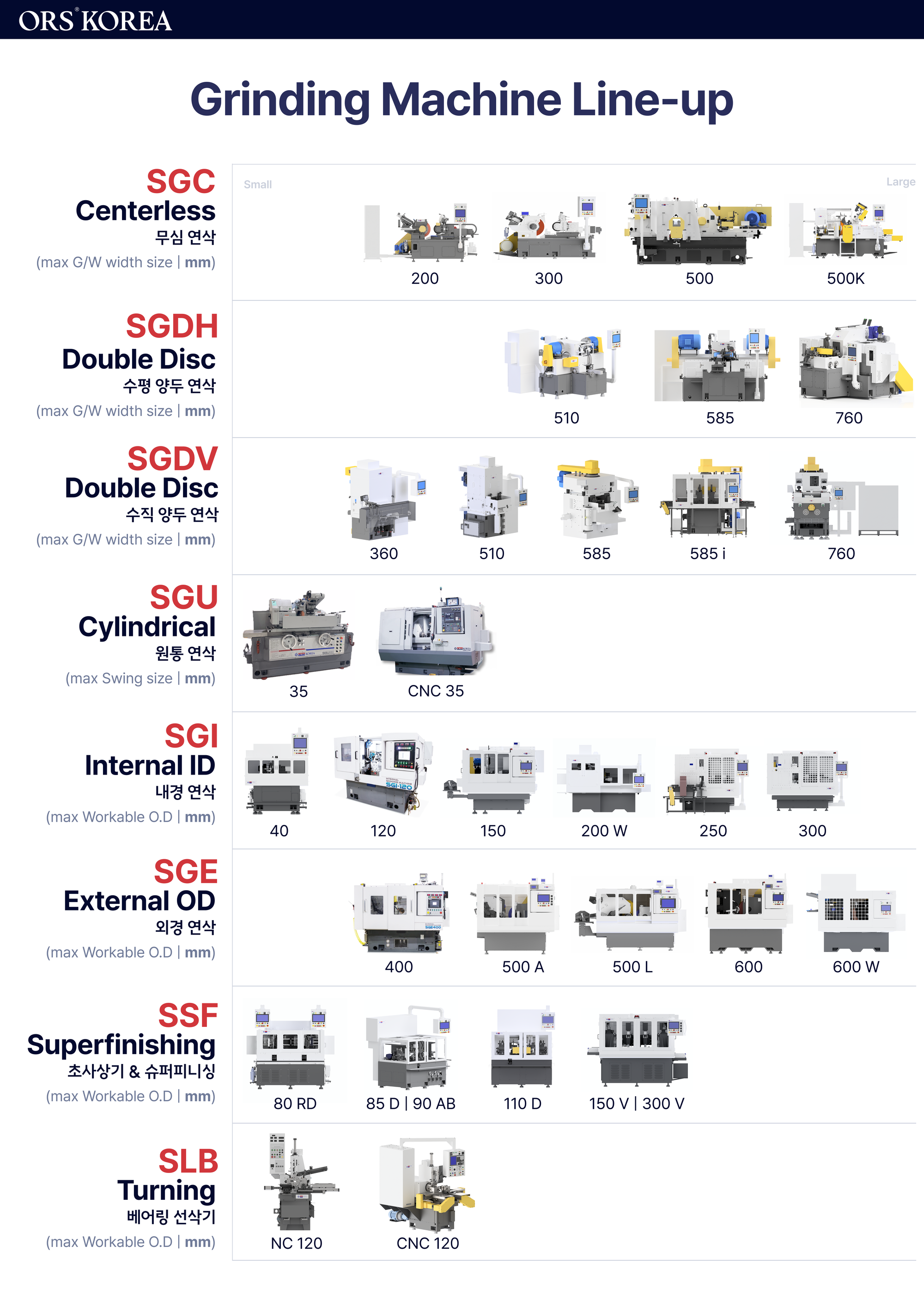
ORSKOREA provides precision grinding machine solutions for various automotive parts manufacturing conditions. Depending on the workpiece shape, machining range, production line layout, and automation requirements, ORSKOREA can support PLC, NC, and CNC-based machine configurations. In addition to standard grinding machines, customized dedicated grinding systems can also be considered for specific production environments.
오알에스코리아는 다양한 자동차 부품 제조 조건에 대응할 수 있는 정밀 연삭 장비 솔루션을 제공합니다. 가공물 형상, 가공 범위, 생산 라인 구성, 자동화 요구 수준에 따라 PLC, NC, CNC 기반 장비 구성을 검토할 수 있으며, 표준 연삭 장비뿐 아니라 특정 생산 환경에 맞춘 특수 전용 연삭 시스템도 제안할 수 있습니다.
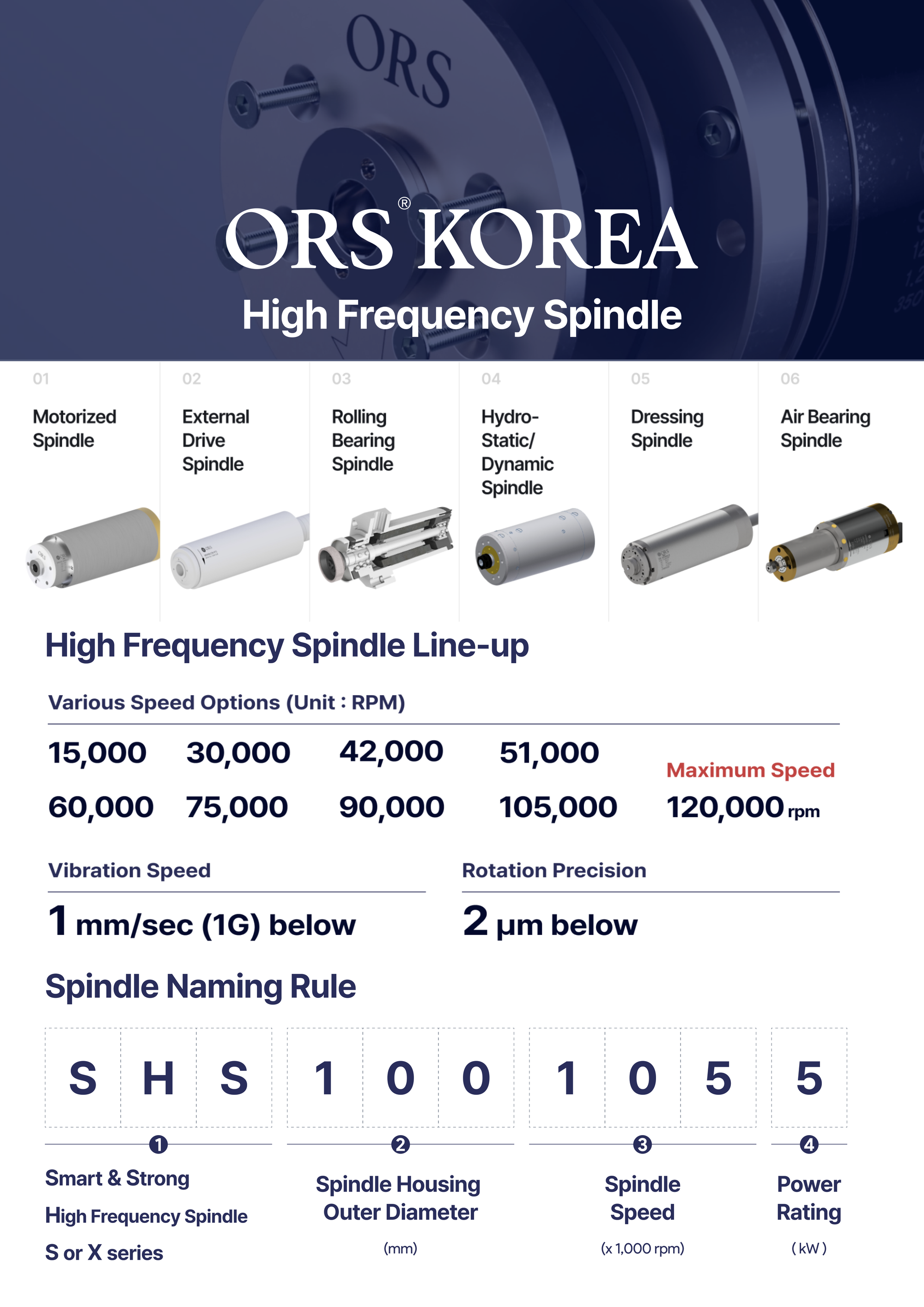
Spindle performance is another key factor that determines grinding quality. The spindle is directly connected to rotational accuracy, vibration characteristics, heat generation, surface roughness, and overall machine reliability. In automotive parts production, stable spindle performance affects not only machining accuracy but also equipment uptime and maintenance planning.
ORSKOREA provides a wide range of spindle technologies, including high-speed/high-frequency spindles for grinding applications, high-precision spindles for production equipment, belt-driven spindles, built-in motor spindles, hydrostatic spindles, and hydrodynamic spindles. Depending on the application and required machining conditions, ORSKOREA can support spindle configurations with speeds of up to 120,000 rpm.
연삭 품질을 결정하는 또 하나의 핵심 요소는 스핀들 성능입니다. 스핀들은 회전 정밀도, 진동 특성, 발열, 표면 조도, 장비 신뢰성과 직접적으로 연결됩니다. 자동차 부품 생산 현장에서 안정적인 스핀들 성능은 가공 정밀도뿐 아니라 설비 가동률과 유지보수 계획에도 영향을 미칩니다.
오알에스코리아는 연삭용 고속·고주파 스핀들을 비롯해 생산설비용 고정밀 스핀들, 벨트 구동 스핀들, 내장형 모터 스핀들, 정압 스핀들, 동압 스핀들 등 다양한 스핀들 기술을 제공합니다. 적용 공정과 요구 가공 조건에 따라 최대 120,000 rpm급 스핀들 구성까지 대응할 수 있습니다.
Key Takeaways for Indonesia’s Automotive Parts Industry
인도네시아 자동차 부품 산업에서 확인한 주요 시사점
INAPA 2026 showed that Indonesia’s automotive parts industry is expanding beyond parts distribution and aftermarket demand toward stronger manufacturing capability and technical support. For local manufacturers and suppliers, product quality, production efficiency, technical support, and equipment lifecycle management may become important factors in future competitiveness.
In this market environment, manufacturers need to consider not only new equipment investment but also how to maintain and improve the performance of existing production systems. Spindle repair, machine overhaul, and retrofit solutions can be practical options for maintaining key production assets, reducing unplanned downtime, and extending equipment service life.
As the market continues to advance, the role of a technical partner that can support machining quality, equipment reliability, and lifecycle management is expected to become increasingly important.
INAPA 2026은 인도네시아 자동차 부품 산업이 단순한 부품 유통과 애프터마켓 수요를 넘어, 제조 역량과 기술 지원을 함께 고려하는 방향으로 확대되고 있음을 보여주었습니다. 현지 제조사와 공급사에게는 제품 품질, 생산 효율, 기술 지원, 장비 라이프사이클 관리 역량이 향후 경쟁력을 좌우하는 중요한 기준이 될 수 있습니다.
이러한 시장 환경에서는 신규 장비 도입뿐 아니라 기존 생산 설비의 성능을 어떻게 유지하고 개선할 것인지도 함께 검토해야 합니다. 스핀들 수리, 장비 오버홀, 리트로핏 솔루션은 핵심 생산 설비의 성능을 유지하고, 예상치 못한 다운타임을 줄이며, 장비 수명을 연장하기 위한 현실적인 선택지가 될 수 있습니다.
시장이 고도화될수록 단순한 장비 공급보다 가공 품질, 설비 안정성, 장비 라이프사이클 관리를 함께 지원할 수 있는 기술 파트너의 역할이 더욱 중요해질 것으로 보입니다.