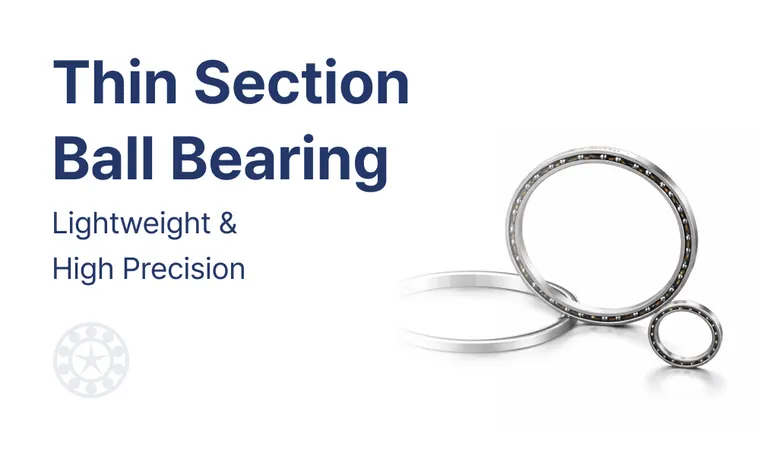
박형 볼 베어링은 씬월 볼 베어링, 슬림 볼 베어링 또는 슬림라인 베어링으로도 불리며, 매우 낮은 회전 소음과 높은 하중 지지 능력을 갖춘 고정밀 제품입니다. 박형 볼 베어링은 공간이 제한적이고 중량이 중요한 어플리케이션을 위해 디자인됐으며, 컴팩트하고 경량화된 솔루션을 제공합니다.
What Are Thin Section Ball Bearings?
박형 볼 베어링이란?
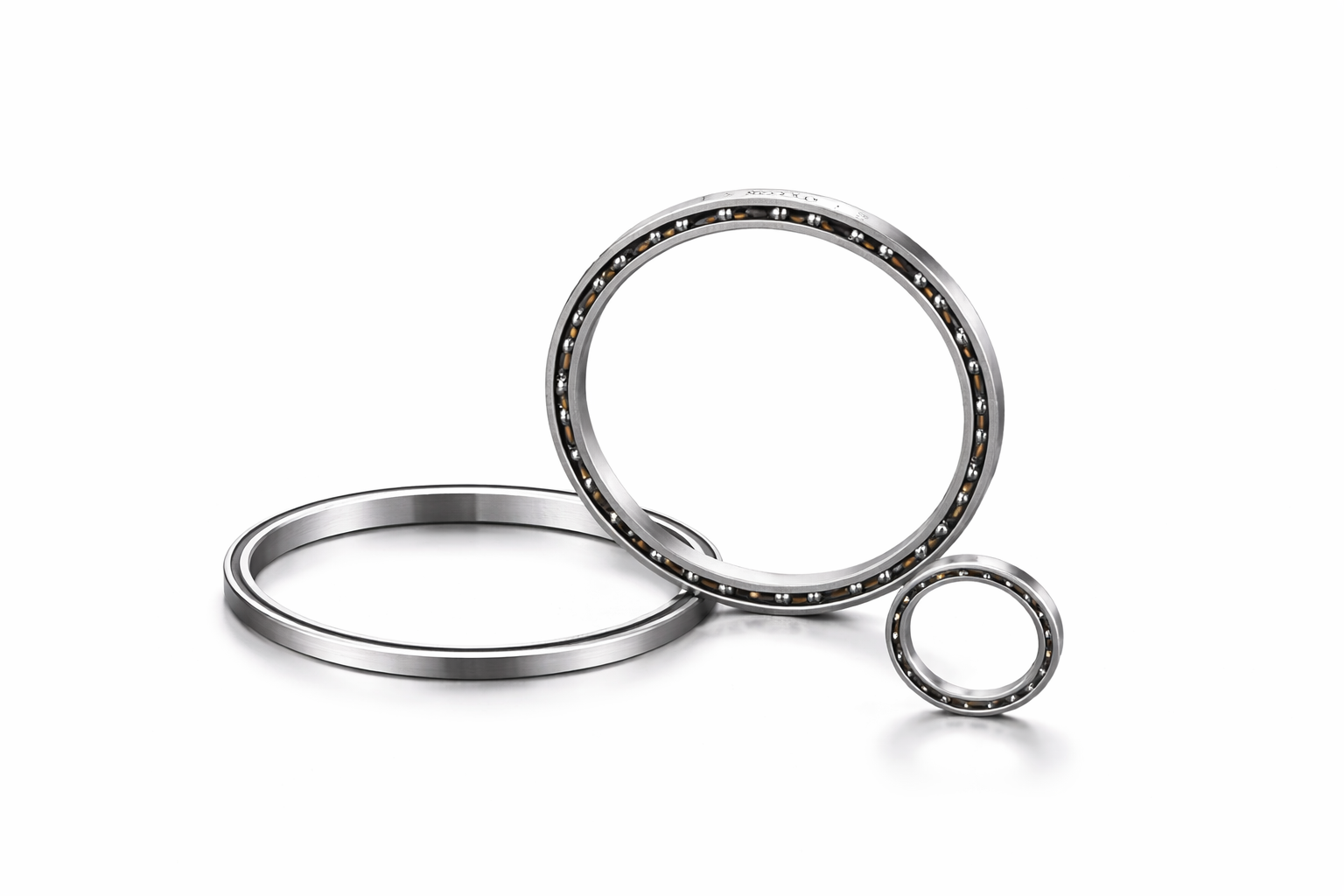
Thin section ball bearings are high-precision bearings designed for applications where space and weight are critical. Unlike standard ball bearings, they maintain a constant cross-section regardless of bore diameter, allowing compact designs without compromising performance.
This unique structure enables engineers to achieve high load capacity, excellent rotational accuracy, and stable performance even in limited installation spaces. As industries continue to demand miniaturization and lightweight solutions, thin section ball bearings have become essential components in modern engineering systems.
박형 볼 베어링은 공간 제약과 경량화가 중요한 환경에서 사용되는 고정밀 베어링입니다. 표준 볼 베어링과 달리 내경이 증가하더라도 단면 치수가 일정하게 유지되는 구조를 가지고 있어, 성능을 유지하면서도 설계 공간을 최소화할 수 있습니다.
이러한 구조적 특징은 제한된 공간에서도 높은 하중 지지 능력과 우수한 회전 정밀도를 확보할 수 있도록 하며, 최근 산업 전반의 소형화 및 경량화 요구에 따라 핵심 부품으로 활용되고 있습니다.