박형 볼 베어링은 얇은 링 구조로 인해 제조 과정에서 발생하는 변형에 민감합니다. 이번 Bearing Insight EP.2에서는 단조, 소프트 선삭, 열처리 과정에서 발생하는 잔류응력과 변형이 진원도와 치수 안정성, 그리고 최종 베어링 정밀도에 어떤 영향을 미치는지 살펴봅니다.
Before We Begin: A Quick Look Back at EP.1
EP.1 주요 내용 먼저 보기
In Bearing Insight EP.1, we introduced what thin section ball bearings are, their key structural features, and the industries where they are commonly applied. If you have not read EP.1 yet, we recommend starting there first, as it provides useful context for understanding why manufacturing these thin-walled rings requires such careful process control.
With that foundation in mind, let’s look at the first major challenge in thin section ball bearing manufacturing: forging.
EP.1에서는 박형 볼 베어링의 정의와 주요 구조적 특징, 그리고 적용 산업을 중심으로 살펴봤습니다. 아직 EP.1을 읽지 않으셨다면 먼저 확인해 보시는 것을 권장합니다. 박형 링의 구조적 특성을 이해하면, 이번 EP.2에서 다룰 제조 공정과 변형 관리의 중요성을 더욱 쉽게 이해할 수 있습니다.
이제 이러한 구조적 특성을 바탕으로, 박형 볼 베어링 제조에서 첫 번째 주요 과제인 단조 공정부터 살펴보겠습니다.
Why Is Forging Challenging for Thin Section Ball Bearing Rings?
박형 볼 베어링 링에서 단조가 어려운 이유는 무엇일까?
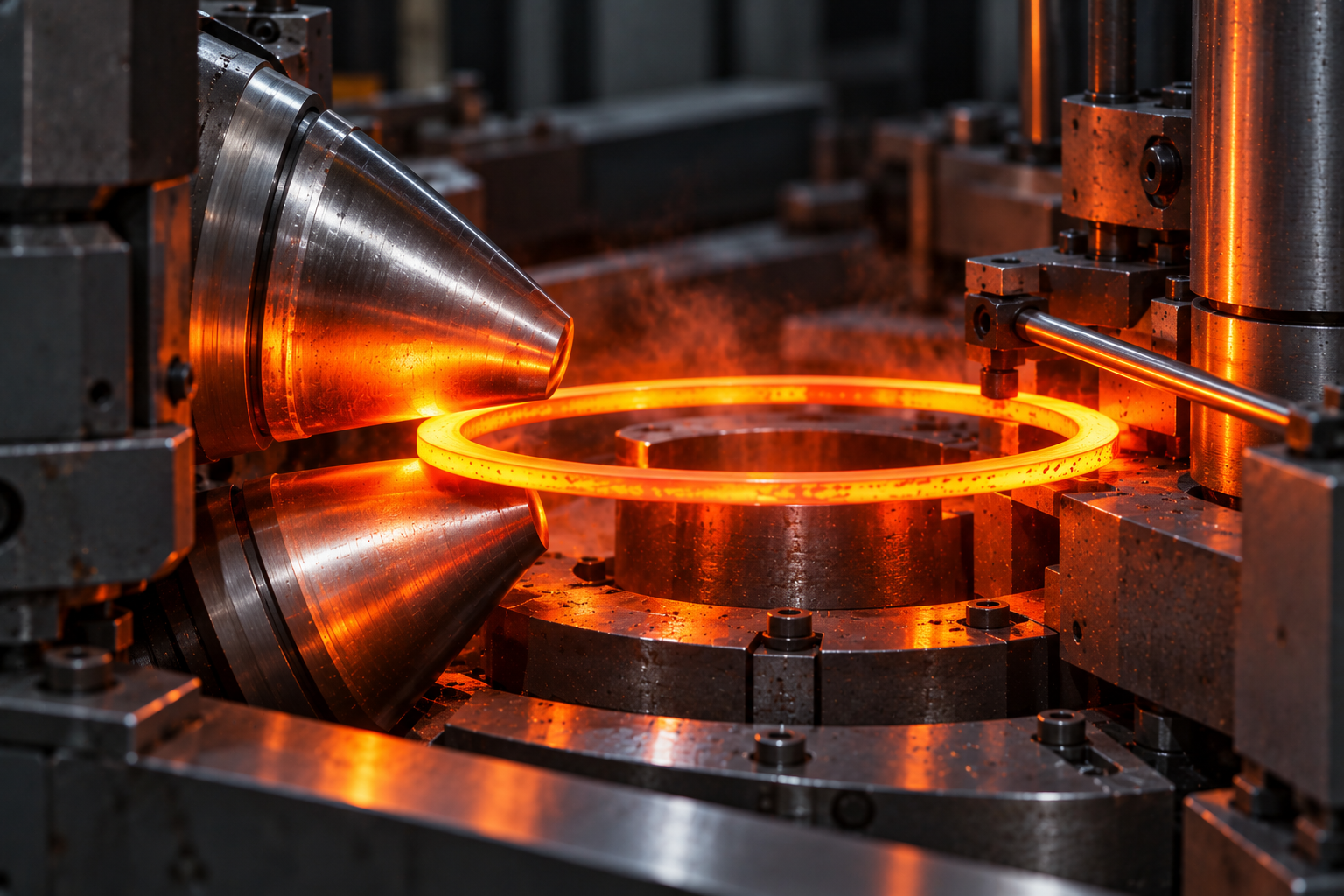
In general, ball bearing rings are manufactured through a sequence that may include billet cutting, hot forging, ring rolling, and soft turning. Forging and ring rolling help form the ring closer to its final geometry, which can improve material utilization and reduce the amount of machining required in later processes. Ring rolling is also widely used to form bearing races, but the process can introduce residual stress within the ring, which may later contribute to distortion during heat treatment.
For thin section ball bearing rings, this challenge becomes more significant because the thin cross-section provides less structural rigidity during forming. Under forging and rolling loads, the ring can be more sensitive to uneven deformation and residual stress distribution. These stresses may not immediately appear as dimensional errors, but they can be released during subsequent heating or material removal, affecting roundness, flatness, and dimensional stability.
일반적인 볼 베어링 링은 빌릿 절단, 열간 단조, 링 롤링, 소프트 선삭 등의 공정을 거쳐 제조될 수 있습니다. 단조와 링 롤링은 링을 최종 형상에 가깝게 성형함으로써 소재 활용도를 높이고 이후 절삭 가공량을 줄이는 데 도움이 됩니다. 다만 링 롤링 과정에서는 베어링 링 내부에 잔류응력이 형성될 수 있으며, 이러한 응력은 이후 열처리 과정에서 변형으로 이어질 수 있습니다.
박형 볼 베어링 링에서는 이러한 문제가 더욱 중요합니다. 얇은 단면으로 인해 구조적 강성이 낮기 때문에 단조와 링 롤링 중 가해지는 하중에 더 민감하게 반응할 수 있으며, 그 과정에서 불균일한 변형과 잔류응력이 발생할 수 있습니다. 이러한 응력은 공정 직후에는 뚜렷한 치수 오차로 나타나지 않더라도, 이후 가열이나 소재 제거 과정에서 해방되면서 진원도, 평면도 및 치수 안정성에 영향을 줄 수 있습니다.
One approach that can be considered is the multi-ring seamless rolled forging concept, in which two or more thin rings are formed together as a thicker integrated blank. By temporarily increasing workpiece stiffness during forming, the process can help distribute forming loads more evenly and improve stability. After rough machining or grinding, the rings are separated individually, allowing manufacturers to retain the material and forming advantages of forging while reducing the deformation risk associated with thin-walled rings.
이러한 문제를 줄이기 위해 검토할 수 있는 방법 중 하나가 다중 링 일체형 심리스 롤드 단조 개념입니다. 두 개 이상의 박형 링을 하나의 두꺼운 일체형 블랭크처럼 성형해 공작물의 강성을 일시적으로 높이고, 성형 하중을 보다 균일하게 분산시키는 방식입니다. 이후 황삭 가공 또는 황삭 연삭 후 개별 링을 분리함으로써, 단조의 소재 및 성형 특성을 활용하면서 박형 링에서 발생하기 쉬운 변형 위험을 줄일 수 있습니다.
How Does Soft Turning Affect Thin Section Ball Bearing Accuracy?
소프트 선삭은 박형 볼 베어링의 정밀도에 어떤 영향을 미칠까?
During soft turning, thin section ball bearing rings can be affected by cutting conditions, machining heat, and especially chuck gripping force. Because thin-walled rings have limited rigidity, excessive or uneven clamping can cause elastic or plastic deformation, which may later appear as roundness errors or dimensional variation.
소프트 선삭에서는 절삭 조건, 가공 열, 그리고 특히 척의 파지력이 박형 볼 베어링 링의 변형에 영향을 줄 수 있습니다. 박형 링은 강성이 낮기 때문에 과도하거나 불균일한 클램핑이 탄성 또는 소성 변형을 유발할 수 있으며, 이는 이후 진원도 오차나 치수 변화로 이어질 수 있습니다.
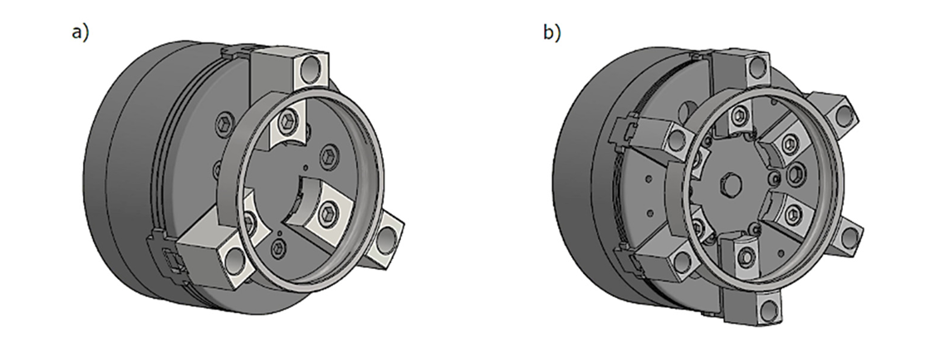
The way the ring is held can therefore be just as important as the cutting conditions themselves. A multi-jaw chuck can distribute gripping force more evenly around the circumference, helping reduce localized deformation.
따라서 박형 링에서는 절삭 조건뿐 아니라 어떻게 파지하느냐도 중요합니다. 다중 조 척은 원주 방향으로 파지력을 보다 균일하게 분산시켜 국부적인 변형을 줄이는 데 도움이 될 수 있습니다.
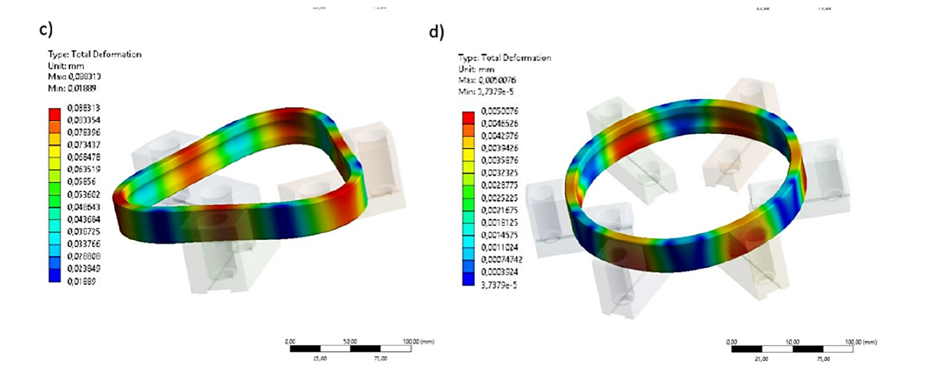
FEM results show that the 3-jaw chuck produces a more pronounced triangular deformation pattern, while the 6-jaw chuck distributes the gripping force more evenly and reduces profile error.
FEM 해석 결과에서는 3조 척 사용 시 삼각형에 가까운 변형 패턴이 더 뚜렷하게 나타나는 반면, 6조 척은 파지력을 보다 균일하게 분산시켜 형상 오차를 줄이는 경향을 보여줍니다.
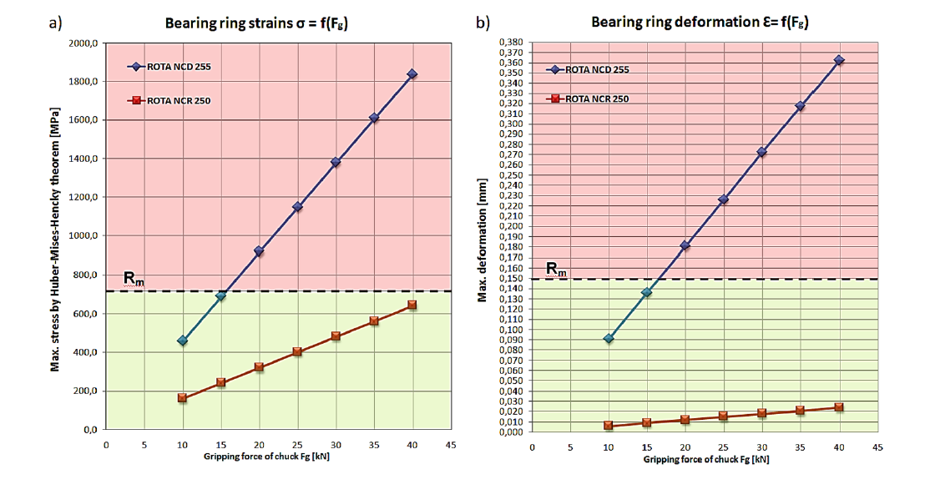
According to the graph, the 3-jaw chuck produced approximately 0.09 mm of deformation at 10 kN, and the calculated stress exceeded the yield-limit region as gripping force increased beyond approximately 15 kN. In contrast, the 6-jaw chuck maintained much lower deformation under the same loading conditions. This shows that chuck selection and gripping force optimization are critical factors in controlling deformation during soft turning.
그래프에 따르면 3조 척은 10 kN의 파지력에서 약 0.09 mm의 변형이 나타났으며, 파지력이 약 15 kN을 넘어가면서 계산 응력이 항복 한계 영역을 초과하는 결과가 나타납니다. 반면 6조 척은 동일한 하중 조건에서 훨씬 낮은 변형을 보였습니다. 이는 소프트 선삭에서 척 선정과 파지력 최적화가 박형 링의 변형 제어에 매우 중요한 요소임을 보여줍니다.
How Can Heat Treatment Minimize Thin Section Ball Bearing Distortion?
열처리에서 박형 볼 베어링의 변형을 어떻게 줄일 수 있을까?
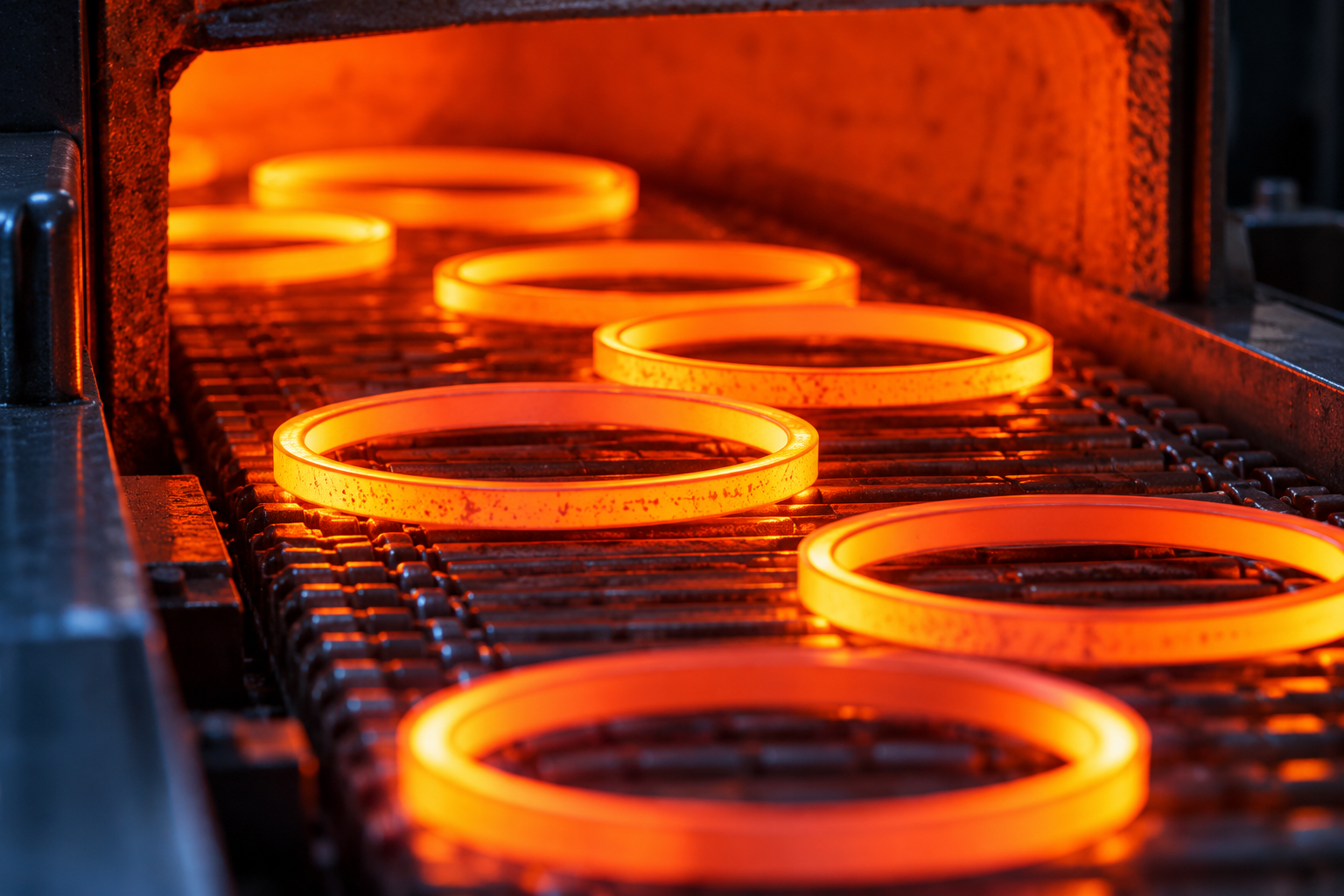
During heat treatment, thin section ball bearing rings are highly sensitive to thermal gradients, phase transformation, and pre-existing residual stress. For this reason, distortion control should begin before quenching, with attention to material condition, balanced machining allowance, and residual stress generated during earlier processes such as forging and soft turning.
For bearing steels such as AISI 52100, uniform heating, multi-stage preheating, and controlled austenitizing at approximately 830–845°C are important for maintaining dimensional stability. Uniform support and proper ring orientation are also necessary because uneven fixturing can contribute to distortion at high temperatures.
During quenching, martempering or controlled hot-oil quenching may be considered to reduce thermal and transformation stresses. Subsequent tempering can further improve dimensional stability, while cryogenic treatment may also be considered for very thin or high-precision rings. Ultimately, heat treatment distortion is also influenced by residual stress accumulated during earlier manufacturing processes.
열처리 과정에서 박형 볼 베어링 링은 온도 구배, 상변태, 그리고 앞선 공정에서 축적된 잔류응력에 민감하게 반응합니다. 따라서 변형 관리는 담금질 단계에서만 시작되는 것이 아니라, 소재 상태와 가공 여유, 단조 및 소프트 선삭에서 발생한 잔류응력까지 함께 고려해야 합니다.
AISI 52100과 같은 베어링강은 균일한 가열과 다단 예열, 약 830–845°C 범위의 제어된 오스테나이트화가 치수 안정성 확보에 중요합니다. 또한 고온 상태에서는 불균일한 지지나 배치가 변형으로 이어질 수 있기 때문에, 링을 안정적으로 지지하고 배치하는 조건도 중요합니다.
담금질 단계에서는 열응력과 변태응력을 줄이기 위해 마템퍼링(martempering) 또는 제어된 고온 오일 담금질을 고려할 수 있습니다. 이후 템퍼링을 통해 치수 안정성을 높일 수 있으며, 매우 얇거나 고정밀이 요구되는 링의 경우에는 심냉 처리도 검토할 수 있습니다. 결국 열처리 변형은 열처리 단계뿐 아니라 앞선 제조 공정에서 누적된 잔류응력의 영향도 함께 받습니다.
Precision Begins Before Grinding
정밀도는 연삭 이전부터 결정됩니다
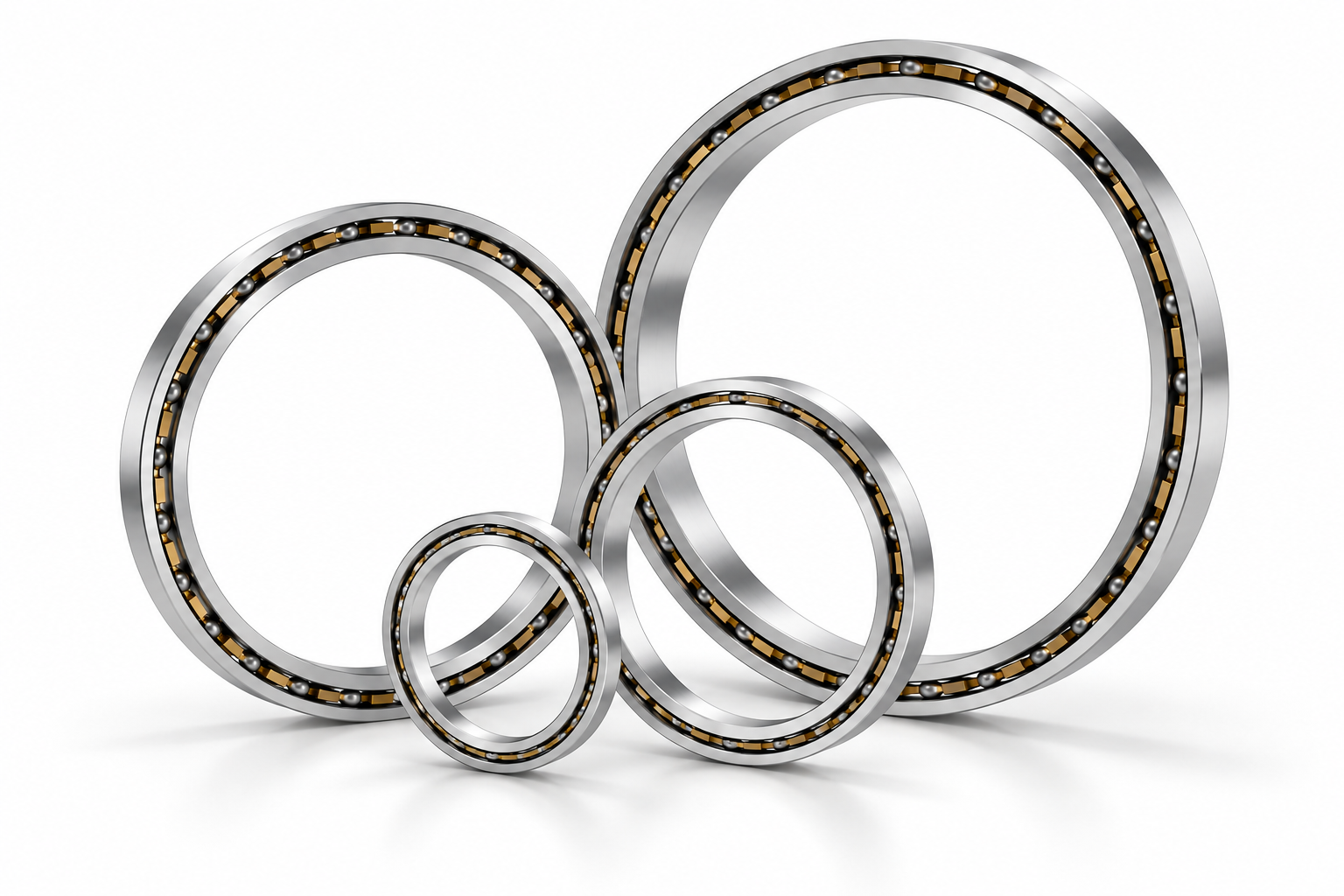
Final accuracy of a thin section ball bearing is not determined by grinding alone. Residual stress and deformation introduced during forging, soft turning, and heat treatment can remain in the ring and influence the amount of correction required during final finishing.
This means that dimensional stability must be managed throughout the entire manufacturing sequence. By controlling deformation before grinding, manufacturers can create more stable conditions for achieving the required roundness and final accuracy.
In the next episode, we will look at how precision grinding controls the remaining deformation after heat treatment and how hard turning can be applied as an alternative process for improving productivity.
박형 볼 베어링의 최종 정밀도는 연삭 공정만으로 결정되지 않습니다. 단조, 소프트 선삭, 열처리 과정에서 발생한 잔류응력과 변형은 링에 남아 이후 최종 가공에서 필요한 보정량에 영향을 줄 수 있습니다.
따라서 치수 안정성은 전체 제조 공정에서 연속적으로 관리해야 합니다. 연삭 이전 단계에서 변형을 안정적으로 제어할수록 최종 진원도와 요구 정밀도를 확보하기 위한 가공 조건도 보다 안정적으로 구성할 수 있습니다.
다음 Bearing Insight EP.3에서는 열처리 이후 남아 있는 변형을 정밀 연삭으로 어떻게 제어하는지, 그리고 생산성 향상독을 위한 대안 공정으로 하드 터닝이 어떻게 활용될 수 있는지 살펴보겠습니다.